How to print these articles

There are several methods to print these articles.

Using notepad or text editor:

Select text you want to print, copy it to the clipboard using CTL-C. Paste into notepad or your favorite text editor using CTL-V. Use your text editor to print.
Showing posts with label DIY. Show all posts

Wednesday, August 30, 2017

Many uses for foam ties

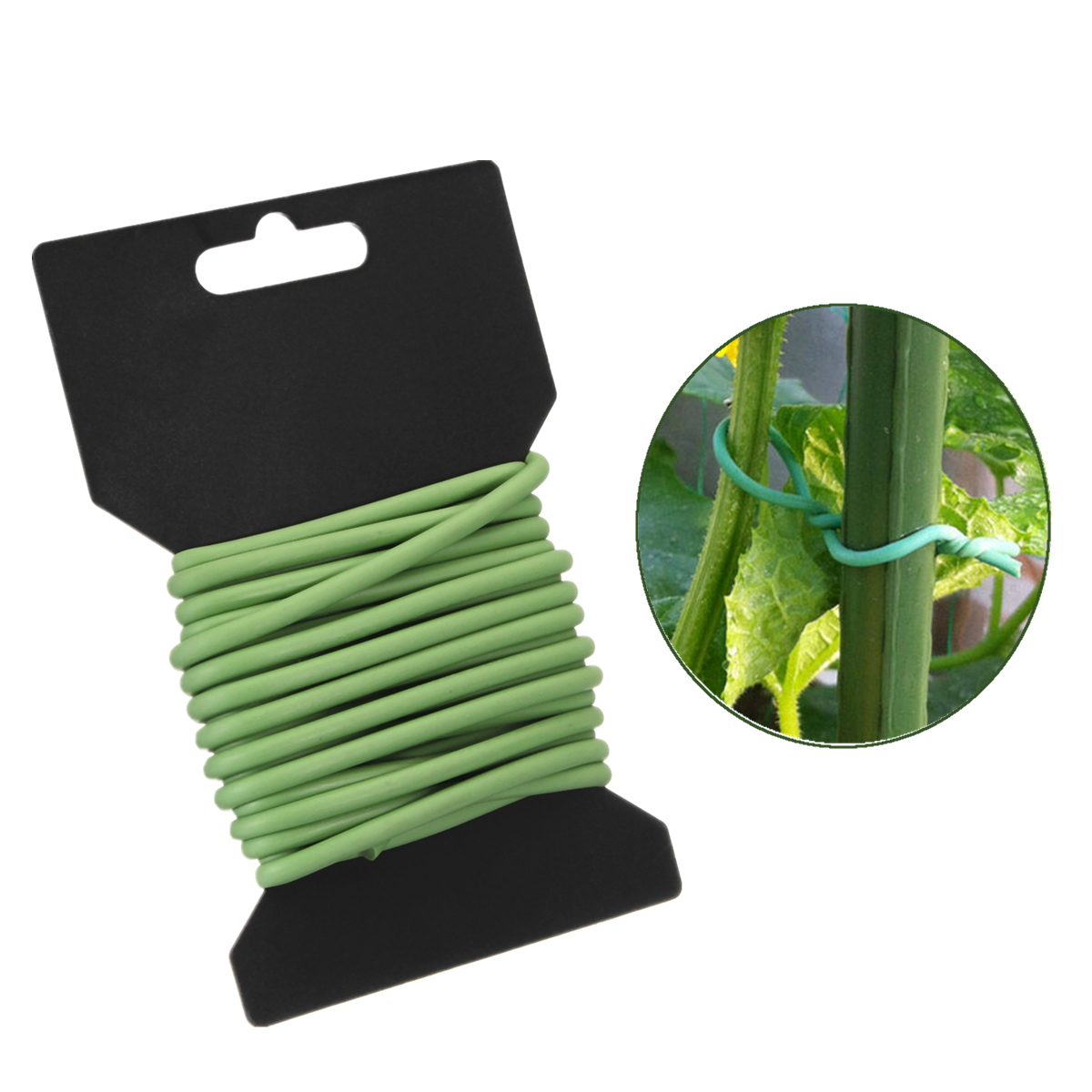
We are all familiar with the wire ties. They used to come on bread or baked goods. They are also used in the garden. But there is a better tie with many uses, it's a foam covered wire tie. Sold here. Here are just a few uses.
  1. Keep headphone or USB cords neat.
  2. Tie up plants to stakes.
  3. Hold Christmas lights to a gutter. 
  4. Clip alcohol gel to a cooler, picnic basket, or backpack.
  5. Keep all pens together in a drawer so you can find them.
  6. Hang paperclips or binder clips on them and take this with you in your backpack. 

 Sometimes these are sold at Dollar Tree or other dollar stores so keep an eye out for them.

Wednesday, August 23, 2017

Micro hydro power can charge your power bank while you shower

There are a couple micro-hydro power generators on Ebay. These are not full kits, you will need to hook up a USB charger board to it to limit the output to 5vdc, and you will have to add a female USB port. This one hooks to any standard US pipe water supply, like your shower, and is said to generate 5-12v of power. But tests show it only generates 5v with no load, and 4.2vdc with a load. 4.2vdc is not enough to charge your power bank, but if you add a power booster to boost it to 5vdc it should work. This means it will generate power while you shower, wash your hands, or while the toilet tank is filling with water. You get more use out of the flowing water.

This is the same style as above and is stated to generate 100ma, at no load, which sounds more accurate.

This one has no case and is an open turbine. Again, it is unlikely to meet it's stated specs with a load on it. The threads might be for standard US water supplies, but I can't be sure. Also note that a US garden hose thread is not the same as a US water supply pipe thread. But there are adapters to go from one to the other. Some specs for this item:

This one with a case, claims to output 8.8vdc to 15vdc. At $8.10usd out the door, higher than the first item mentioned above, let's hope it outputs 5vdc even with a load. 
  1. Water inlet/outlet: 1/2"
  2. Output Voltage: DC9.8~18.5V/no-load
  3. DC8.8 ~ 15V/0.1K load Max power : 3.5W 
  4. Output Current: 128 to 260 MA/0.1 K load
  5. Water Pressure: 0.08 ~ 0.45MP
  6. Maximum Water Pressure: 0.55MP
But these might be fun to try and play with them.

Thursday, April 6, 2017

DIY batteries and choosing an electrolyte

When making DIY batteries, which electrolyte should we use? It should be easily found in stores, inexpensive, and fairly safe. But which liquid electrolyte works best? 
The best electrolyte we found was hydrogen peroxide + table salt. Hydrogen peroxide is available at drug stores and safe to use, but we suspect the solution has to be made up fresh -- it won't keep.
Another battery they talk about uses 2 different electrolytes, one electrolyte for each metal:
copper metal | copper sulfate solution | salt solution | zinc metal

This uses 2 different paper layers soaked in each electrolyte: copper sulfate and a salt solution. The problems with this is the paper would eventually dry out unless it is in a sealed container. Putting shrink tubing around a penny and zinc battery might help.

But ethanol, ammonia, vinegar, sulfuric acide, and muriatic acid can also be used. But saltwater can be very harsh on certain metals like magnesium.

By looking for a "galvanic potential" chart we can see that aluminum and graphite in a solution of hydrogen peroxide and salt can work well, but the hydrogen peroxide will not last long, especially if exposed to light.

Source
http://www.pa.uky.edu/~sciworks/em/preview/voltz.htm
More examples of electrolytes, including bases.


Monday, February 20, 2017

DIY Magnesium, graphite, and salt water battery

Here's a Youtube video about making a DIY battery from magnesium, graphite, and salt water as the electrolyte.

  1. I got magnesium ribbon from Ebay. 
  2. Graphite is what's in most US pencils these days, it's not actually lead, the metal. So carefully cut away the wood from a pencil, and you are left with a graphite core. 
  3. Any saltwater solution can be made. You can start with a weak one: 100ml water, 1tsp salt. Take a voltage reading with a multimeter. 
  4. Add another 1tsp of salt and stir well. Take another voltage reading. 

  • How good is this battery compared to other DIY batteries in this series? 
  • What if you change the electrolyte to vinegar? Lemon juice? Soda? Do the volts go up or down?


Wednesday, February 15, 2017

DIY penny and nickel battery

This battery is made from some US pennies, and nickels. It also uses a saltwater electrolyte.


Source
Instructables.

Sunday, February 5, 2017

More DIY battery links

Looking for more fun to make your own batteries at home? Here are some more links.

DIY battery from Scitoys.com. Uses copper and zinc in an acid electrolyte.


Friday, February 3, 2017

DIY aluminum air battery

This aluminum air battery is made from aluminum foil, and activated charcoal, with a paper towel between them soaked in an electrolyte.

Terms:
  • Cathode: the negative terminal
  • Anode: the positive terminal

To test the battery, follow the directions from the site. Then take a multimeter and put the negative (-, black) probe on the charcoal, and the positive end (+, red) on the aluminum foil.
  1. How many volts does it produce? 
  2. How many amps? 
  3. What happens if you crush the charcoal into a powder? Do volts or amps increase? 
Source
Exploratorium.


Monday, January 30, 2017

DIY penny battery

This DIY penny battery needs some US pennies with a zinc core (after 1982) and some cardboard soaked in an electrolyte.


When making the cardboard pieces, make sure they do not touch any other cardboard pieces. This will cause a short and the battery will not work.

From Exploratorium.edu.

Sunday, January 22, 2017

DIY AA battery delivers 1.6vdc!

Yes I'm Jonesing for DIY batteries! There will be several articles on different types of DIY batteries.

This is a neat DIY project even kids can do. The voltage is so low it will hurt no one.


This delivers 1.6vdc. It probably costs more than batteries at the Dollar Tree, but it will work in a pinch. All you need is galvanized washers (which provides the zinc layer) and copper washes (for the copper layer), and cardboard soaked in vinegar or another acidic solution, or salt water.

An AA battery has a diameter of .53" (14mm) and a length of 1.95" (49.7mm) including the top button. If fitting this into a device is important, try to get 13mm washers (outside diameter) so you will room for the shrink wrap. A US penny can be used but it's too wide at 18.9mm.

Modern US pennies since about 1984 have a zinc inside, and thin copper layer outside. So you can sand off one side of the penny to expose the zinc, and the other side will be copper.


Some questions to ask when making this:
  1. Does the voltage or amps produced depend on the surface area of the washers? 
  2. What happens to the volts or amps if you change the electrolytes? 
Copper washers.
  1. Copper washers, 10x, from Hong Kong.
  2. Assorted copper washers various sizes, 200 pcs
  3. Copper washers, 6mm inside diam, 10mm outside diam, 1mm thick. 10 pcs.
  4. Copper washers, 14mm outside diam, 10pcs.  
  5. Copper washers, 13mm outside diam, 10pcs.

Zinc washers. (Galvanized washers means they are coated with zinc to resist rust.)
In various metric sizes.

Misc
  1. Washer dimensions.
  2. More metric washer dimensions (PDF).
  3. M6 washers have an OUTSIDE diameter of 11.5-16mm.
  4. M7 washers have outside diameter of 13.5mm.

Tuesday, January 10, 2017

Testing different electrolytes at home for DIY batteries.

For each DIY battery you make, you have dissimilar metals, like copper and zinc. But sometimes they are not always metal, like the aluminum foil and activated charcoal battery. In order to test the power output of different electrolytes we must make all other variables the same. Here's what you will need:
  1. Penny
  2. Nickel, post-1964 (1964 was a transition year so some nickels contain silver, get a nickel post-1964 to make sure it has no silver)
  3. 2 wires each with an alligator clip.
  4. Multimeter. If you want to use a USB meter instead you will need to buy this USB to test hook adapter.
  5. 3 beakers or glasses. Plastic cups can work also. 
  6. Salt
  7. Vinegar
  8. Lemon juice
  9. Measuring spoon of 1 teaspoon
  10. Measuring beaker of 100ml. If you don't have a beaker use a measuring cup for liquid measurements, not dry measurements.

Above: I use different containers, and I found a 60ml measuring cup!
Above: Find some wires with alligator clips on both ends. Hook the red wire to the nickel (+, red) and the black wire to the penny (-, black).

Now put 100ml in a glass, put both the penny and nickel in the water, and turn the multimeter to measure DC voltage. We get about 147millivolts with plain water, that's not enough to even light an LED.

Remove the penny and nickel. Now take the 100ml of water and add one level teaspoon of salt to it. Stir it well. Now put the penny and nickel back into the water. What voltage does the voltmeter read now?

If your multimeter reads a negative voltage it just means you have to switch the probes around. A negative voltage won't harm your multimeter. 

Remove the nickel and penny and add a second teaspoon of salt, stir it well. Put the nickel and penny back into the saltwater. How much voltage is being generated? How many amps?

Discard the salt water and rinse the glass well. Now make these solutions and test the voltage and amps they output. Write each result down.
  1. 50ml water, 50ml vinegar. 
  2. 50ml water, 100ml vinegar. 
  3. Discard vinegar water and rinse glass well. 
  4. 50ml water, 50ml lemon juice. 
  5. Discard lemon water and rinse glass well. 
  6. Add 100ml of soda. Take a voltage reading. Write it down.

What happens to the voltage and amps in each case? By adding more vinegar or lemon juice (both acids), does the voltage go up or down? What kind of voltage does soda give? Sodas are very acidic so they should work very well.

Summary
You can search the internet for different kinds of metals. Certain combinations of metals give higher voltages, and some give more amps, and some give a longer run time. Likewise, the stronger acids can also have an effect on voltage.

Tuesday, October 18, 2016

Charge your phone with a banana

Yes, this should work, given that you use 2 different types of metals, one for the positive lead one for the negative lead. Any acidic solution will work, whether it's from an orange, lemon, apple, or, I guess, even a banana.


Source
Device Byte.

Wednesday, May 25, 2016

Make your own yarrow mosquito repellent

A US Army study found a yarrow tincture repelled mosquitoes better than DEET. There is some question about how toxic DEET is as the skin absorbs it.

Yarrow, Achillea millefolium, grows in sunny areas and it likes sandy soil. I have lots in my backyard and it spreads somewhat fast and is very hardy. I get flowers around the end of June with more consistent hot weather. It seems to survive drought quite well as we get almost no rain for 8 weeks in July and August. It also has very wispy, ferny leaves and even the leaves look nice.

Another commenter mentions:
I drop a few drops of eucalyptus oil in coconut oil and rub it on exposed skin. It works really well.

Sources
Natural News.
The study about how DEET is toxic.
Making the tincture.


Monday, May 16, 2016

DIY batteries for fun

Some people have made their own batteries as kids, but now that we have had LED lights for years, these low-voltage batteries can be fun to make and be useful once again. DIY batteries can be made from a variety of items. The basic parts of a battery are: cathode, anode, and electrolyte. Batteries are actually made of multiple cells. The instructions down below are actually for one cell. Use different materials to find how many volts and amps it produces. You will need a multimeter, about $12usd online or at the store.

Some people have powered an electric clock with a lemon, or potato. Some have used electrolytes like lemon juice, vinegar, or even salt water. But the secret is in the cathode and anode materials. Usually use a glass or plastic jar to hold the electrolyte.

Here is a selection of DIY batteries you can make from household items. Reduce, reuse, recycle.
  • Battery from carbon rod and zinc strip
  • Copper and aluminum in coke. This has a better description of using different materials and electrolytes, and the voltage output from each trial. 
  • Try magnesium strips (from Ebay) with one other metal, in salt water. Which metal gives the most volts?
  • Stacked cell battery made from copper pennies, silver strips, and paper or cardboard soaked in salt water. This will work well until the paper/cardboard dries out. This says to use nickels, but only US nickels before 1964 contain silver. A medicine bottle might make a good container for these. 
  • Ye olde lemon battery.  
  • Grant Thompson builds a penny battery to power an LED for 2+ weeks.
Sources of materials:
  1. Aluminum: soda cans, aluminum foil, some old house wiring is aluminum. 
  2. Carbon: pencil leads are carbon. Carbon rods are also found in old batteries.  
  3. Copper: use old copper pipes. Sand off any oxidation with fine sandpaper. Use old copper wire. Older US pennies are mostly copper, but newer ones only have a thin coating of copper.
  4. Zinc: galvanized nails are coated in zinc. Zinc strips can be found online. The newer US pennies have a zinc core; sand off the thin copper coating.

Wednesday, April 6, 2016

Plastic bottle projects

Reduce, Reuse, Recycle

I'll call this series "Reduce, Reuse, Recycle" and each post subject will be preceded by "RRR" to indicate it's part in this series.

While plastic bottles may not be good for food contact, here are some ways you can use those plastic bottles you cannot return for a deposit.

MUST SEE: Guy transforms plastic bottles into super strength plastic rope. This might be useful for transforming bottles into 3d printing string.

23 Bottle Projects. Jewelry holder, plant holders, Christmas tree, and more.

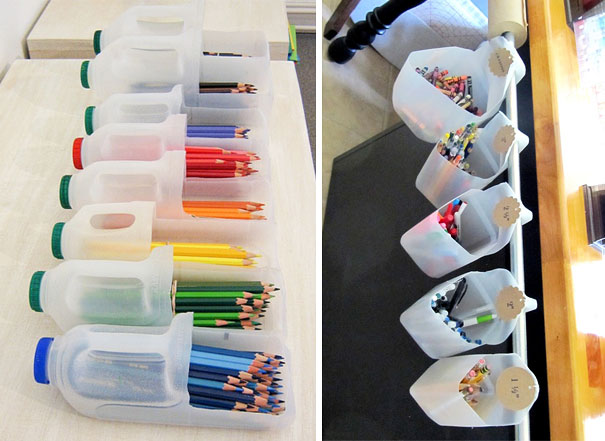
Below: Stuff holders.
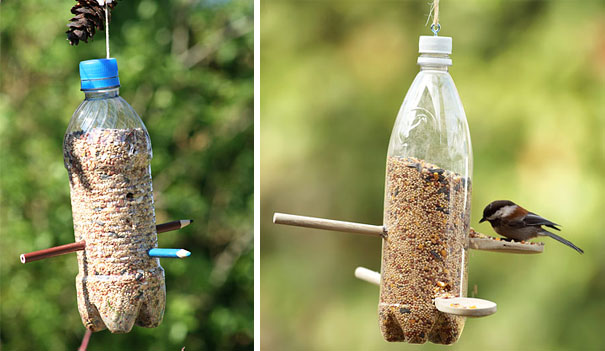
Below: bird feeder.
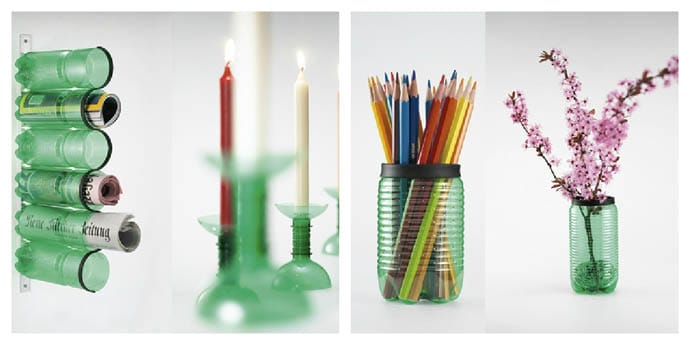
Below: Candelabra, Vase or pencil holder.
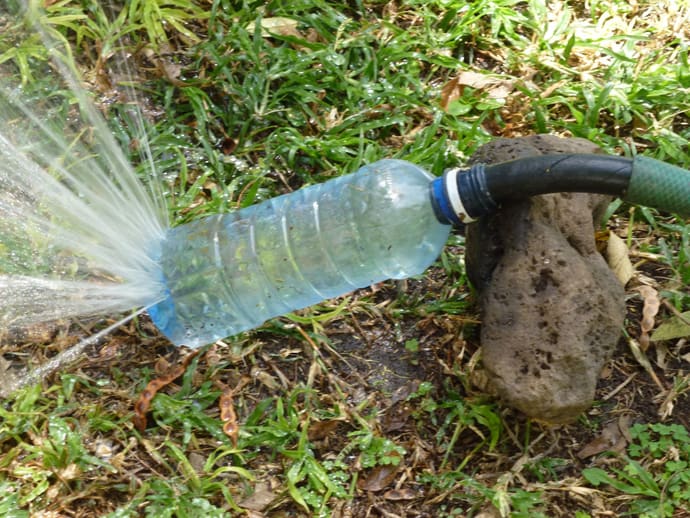
Below: Hose sprinkler.

Below: Small Easter basket.
Below: Penguins.

Below: Hanging storage far right.
Below: Book holders. Instructions and better pic here.


Wednesday, March 30, 2016

Simple DIY LED lights

This post is about making simple LED light circuits. LEDs are Light Emitting Diodes, and as such, they use DC power (batteries) to create light. If you plug an LED light into an AC wall plug, you will need to convert the AC electricity to DC, which gets more complicated. LEDs use less power, so they last longer on batteries, and many systems use solar power to charge the batteries, so they are a lower power option which use less energy, and therefore create less pollution.

Do remember to recycle batteries whenever you can.You can recycle batteries at Batteries Plus, or do a Google search for a place in your town.

There are a few light movements to provide solar-charged LED lights to kids in Africa so they can actually do homework at night with these lights. These lights are often inexpensive, and effective.

NOTE:
  • LEDs have a negative and positive leg. Do not mix them up or your LED will go "poof"! Actually you can mix up the legs, and it just won't work. But if you apply too much voltage, then the LED will go "poof". This page has an image showing you that the LED has a flat side, which is the negative side.
  • If you add a switch, you can add it anywhere in the circuit to cut power.  
  • If you get a brighter LED, 1 watt or larger, it will generate a lot of heat and you might need a heatsink. 

LED flashlight runs on dead batteries

Here on Etsy.

 DIY LED lights, beginner

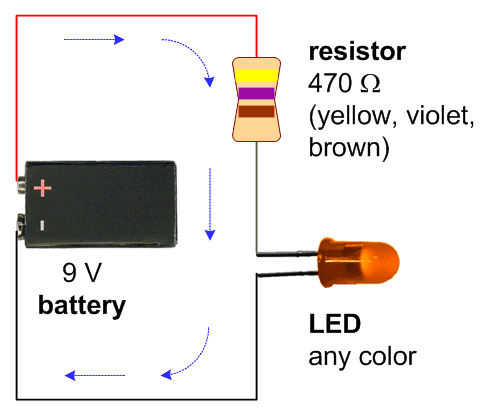
- 9v LED light. This one is easy because it tells you exactly which resistor to use. And 9v batteries are sold at the US Dollar Tree.


- How to choose resistors for an LED light. Nice clear picture.

- Another page with a simple drawing of a basic LED circuit, designed for beginners.


- The LED throwy is one of the simplest LED projects. It is just an LED taped to a coin cell battery, taped to an optional magnet. It has no switch.


More fun with LEDs

- The top 30 LED projects includes: LED bench, solar powered tree decoration, LED ping pong balls, LED chess set, LED swing, and more.

- The Instructables LED page, a collection of LED projects. One can use those UPS batteries for all kinds of things, especially because they are rechargable.

- Glowing mushroom log from Yukio Takano.

- LED Lights for beginners. From Instructables. This is a good one which shows you how to calculate resistor values. Resistor values vary depending on how much power is in your power source. A 9v battery (9vdc) requires a different resistor than 2 AA batteries (3vdc).

- 9v LED light "lamp" made from credit card plastic parts.

Simple commercial lights and concepts

Since Africa is leading this movement, sometimes I call these "African lights".

- LEDAfrica.org shows some interesting lighting and battery concepts.

- The Blocklite sits on a 9v battery. It has high and low modes.
- Here's a variation on the 9v blocklite, the Pak-lite.
Sunday, March 27, 2016

DIY wind power

This post is about various types of DIY wind power, from small systems for the very beginner, to more advanced systems. I'm trying to find some very simple wind systems for beginners, that means, fewer parts is better. But sometimes a person needs a larger generator for serious use. Wind power is not reliable in all weather so people usually end up using wind power to charge up a battery bank for use later, like at night.

Anything that produces rotational movement can be used to turn a DC motor and generate power. Some people use wind power, but others use water power. Water  power is more complicated because you have to have a way to keep parts from getting wet and rusting. Rust can damage or seize parts.

NOTES:
  1. You can use the fan blades and fan blade hub from a small, cheap house fan, and hook it up to a DC motor, and stand. 

- Pringles wind tunnel. You can reverse this and use the DC fan to generate power. Very creative!


- This wind generator uses wind coming out of an air conditioner, so that energy doesn't go to waste.


- A small wind generator suitable for kids to make age 10-18. It uses PVC and a DC motor. You can use almost any DC motor. If you apply DC electricity (batteries) to a DC motor, the axle will spin. If you spin the axle, you get power out of the leads.


- This page contains several wind generators. The bigger ones get more expensive.

- Another wind generator (MotherEarth news) which uses 4 basic parts. It looks like 2 parts are an auto cooling fan and an alternator. With fewer parts, this one would be good for beginners.


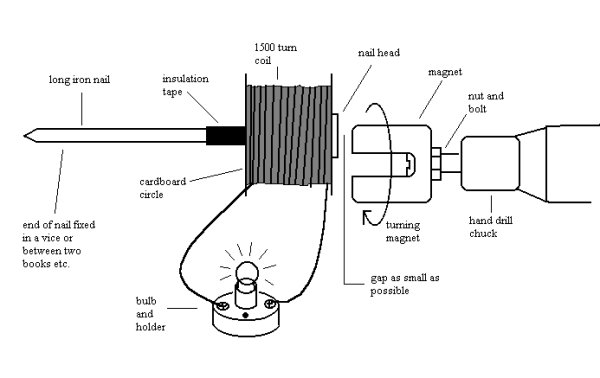
- This simple generator from the UK will help illustrate how the basics work.


- Solar Generator in a toolbox for about $200.

- Info on wind generators including output, graphs, tables you might find handy. Also, avoiding scams,

- Vertical axis wind generator. If you don't like the vanes you can make them simpler somehow.


- Pringles can generator. Eat the chips while you build it.


- Dandelion wind generator. This is a bit more complicated for beginners, but you can adapt the parts to make it simpler.

That's it for now! Maybe I'll do a post on simple solar power setups with battery banks.

Where to find cheap or free DC motors (to generate power)

  1. CD players, including computer CD players
  2. Treadmills
  3. Old VHS players. 
  4. DC computer fans. 
  5. Old computer tape drives. 
  6. Clothes dryers. 
  7. Car starter. 
  8. A DC powered fan, like this one for $15usd. 
  9. Old remote control toys, cars, boats, etc.
  10. Look for these items at Goodwill.
  11. Look at electronics surplus stores. Google "electronic surplus DC motor".
  12. Ask on Freecycle.org. There is a Freecycle site for most major US cities. Find your local Freecycle here.  
  13. If you want to buy a small DC motor go to a hobby shop.