How to print these articles

There are several methods to print these articles.

Using notepad or text editor:

Select text you want to print, copy it to the clipboard using CTL-C. Paste into notepad or your favorite text editor using CTL-V. Use your text editor to print.
Showing posts with label light. Show all posts

Saturday, August 19, 2017

Low-powered LED light in the works

From Newsatlas: A new flat-panel LED light could reduce power use tremendously. Scientists at Tohoku University in Japan have made a cheaper LED lighting device in the form of a flat panel that gets efficiency of 60 lumens per watt, which is pretty darn good for their simple device that has not been tweaked. It uses nanotubes to get this kind of efficiency.


Each carbon nanotube acts similar to a cathode ray tube when a strong electric field is applied. The electric field requires 5kv to work but the device itself uses very little power.

People have been working on other ways for LEDs to use less power. Some pulse power so fast the human eye cannot detect the LED going off and on. One project is the TritiLED which aims to light a dim LED to be used as a marker, for about 10 years. There is also the Decade Flashlight.

Update Nov 2018: My Tritiled, acquired in July 2016, has been running for 2 years straight with no problem. It's never been turned off.

Source
Newatlas.
Review of Scientific Instruments.
DDG search for articles.

Tuesday, August 15, 2017

Super efficient nano-LED research

This is not the same as a super efficient LED circuit where a battery could light an LED for 10 years. This is a whole new LED technology at the nanoscale.

One of the larger bottlenecks between microchips is the data connections. An optical connection, rather than a wire connection, would speed things up, but a light source small enough was not available until now. Scientists at TU Eindhoven made a nano LED that is 1000 times more efficient and can communicate at gigabits per second.

But since this article is from 2017, expect to wait another 8-10 years before we see these things in consumer devices... if it can be made at a reasonable price that is.

Source
Elektor Magazine. 3/6/2017.

Monday, July 10, 2017

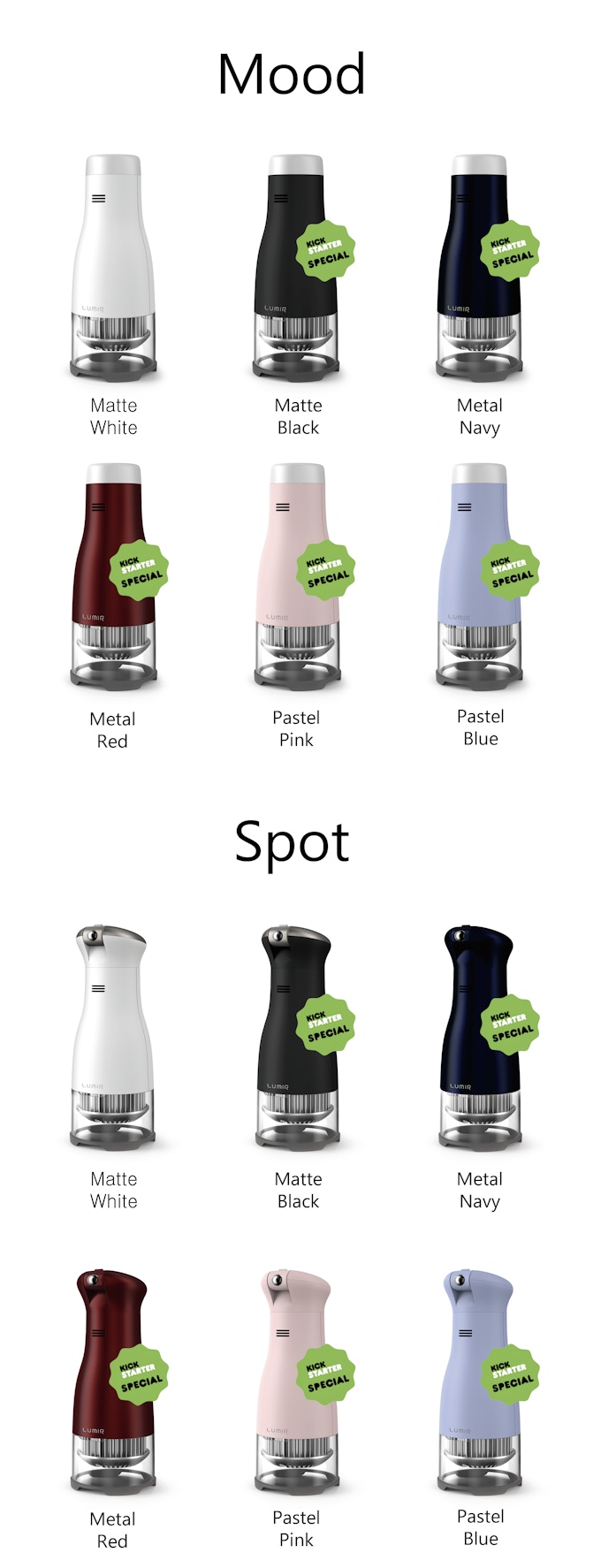
Lumir: a candle-powered LED light

Lumir, the LED powered by a candle. I can see why this would be useful. It's hard for many people, especially older people, to read by a single candle. But I can also see why people would not understand the concept. I can see them thinking "Why would I use a candle if I could just use my $4 LED flashlight or headlamp?"


That's a valid thought. But the technology in Lumir is pretty neat if a bit impractical for many western nations with power. However for nations without power, this might help them study at night by generating enough light to read by. However Lumir is much more expensive than some of the other solar charged lights for Africa.

There are several variations of Lumir and Lumir Spot would be the best for reading a book or magazine.

This appears to use a thermoelectric generator (TEG) and a voltage booster. But TEGs don't product much power, and the voltage boosters to boost the volts up high enough for an LED are expensive.

Wow! It seems they are $109usd on Amazon now.


Thursday, July 6, 2017

Can LED lights run for 25 years? 10 years?

Some people are working on circuits to make a dim LED light run for a year, or even 25 years. The initial attempts are to provide "marker lights". These lights are not light enough to use to walk around in the dark or read by, but they are perfect for marking tent pegs, camp sites, or trails at, for example, concerts or camp sites. They can also be used to mark latrines which are often some distance from camp sites, and be used in astronomy to possibly read text (although the lights are not very bright).

Tritium gas tubes last about 10 years, but they are expensive and not available legally in the US for hobbyists. Also there are some fakes sold on Ebay that only last a few months. In the US they can only be sold as part of a watch, gun sight or compass.  Ebay does not appear to regulate plain tritium vials sold to the US.

Sunday, March 12, 2017

Is Power over Ethernet cable the next big thing?

New CREE light fixtures (not just bulbs, fixtures) use power from ethernet cables. They can also be controlled by the computer over the network. It looks like a special router just for these lights is needed.

There are several levels of PoE:
  1. PoE (IEEE 802.3af) provides up to 13 W (37 to 57 V, max 350 mA).
  2. PoE+ (802.3at) bumps it up to 25 W (42 to 57 V, max 600 mA), but requires Cat5 cabling or better. (If each LED draws 3.3vdc then PoE+ port can support up to 7 of those LEDs. The volts drawn by each LED seems to be the limiting factor, not the amps.)
  3. UPoE: 60vdc limit but at how many amps?


Source
Treehugger.

Wednesday, March 30, 2016

Simple DIY LED lights

This post is about making simple LED light circuits. LEDs are Light Emitting Diodes, and as such, they use DC power (batteries) to create light. If you plug an LED light into an AC wall plug, you will need to convert the AC electricity to DC, which gets more complicated. LEDs use less power, so they last longer on batteries, and many systems use solar power to charge the batteries, so they are a lower power option which use less energy, and therefore create less pollution.

Do remember to recycle batteries whenever you can.You can recycle batteries at Batteries Plus, or do a Google search for a place in your town.

There are a few light movements to provide solar-charged LED lights to kids in Africa so they can actually do homework at night with these lights. These lights are often inexpensive, and effective.

NOTE:
  • LEDs have a negative and positive leg. Do not mix them up or your LED will go "poof"! Actually you can mix up the legs, and it just won't work. But if you apply too much voltage, then the LED will go "poof". This page has an image showing you that the LED has a flat side, which is the negative side.
  • If you add a switch, you can add it anywhere in the circuit to cut power.  
  • If you get a brighter LED, 1 watt or larger, it will generate a lot of heat and you might need a heatsink. 

LED flashlight runs on dead batteries

Here on Etsy.

 DIY LED lights, beginner

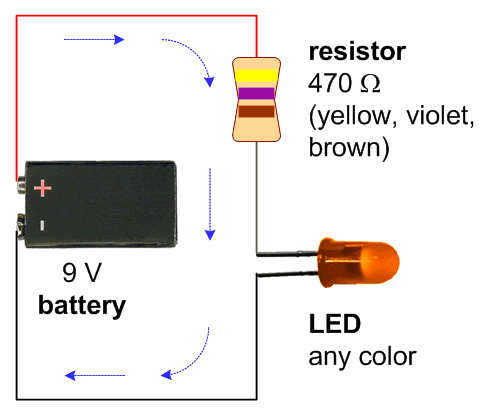
- 9v LED light. This one is easy because it tells you exactly which resistor to use. And 9v batteries are sold at the US Dollar Tree.


- How to choose resistors for an LED light. Nice clear picture.

- Another page with a simple drawing of a basic LED circuit, designed for beginners.


- The LED throwy is one of the simplest LED projects. It is just an LED taped to a coin cell battery, taped to an optional magnet. It has no switch.


More fun with LEDs

- The top 30 LED projects includes: LED bench, solar powered tree decoration, LED ping pong balls, LED chess set, LED swing, and more.

- The Instructables LED page, a collection of LED projects. One can use those UPS batteries for all kinds of things, especially because they are rechargable.

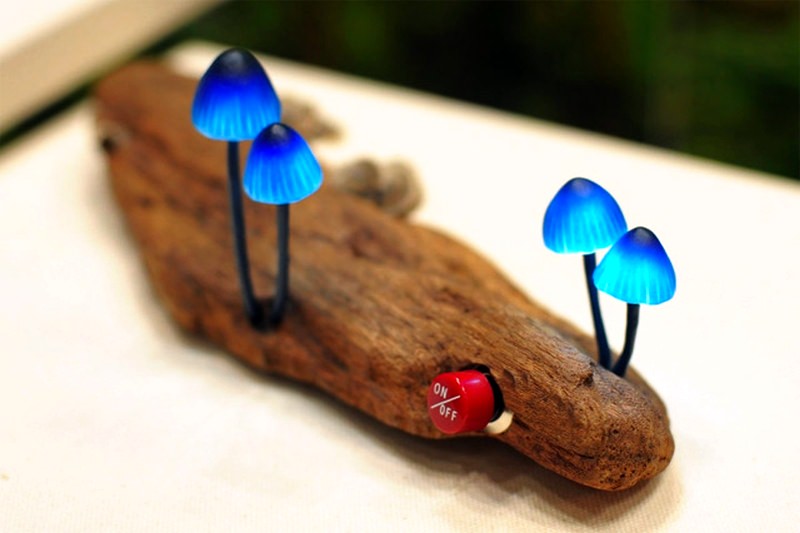
- Glowing mushroom log from Yukio Takano.

- LED Lights for beginners. From Instructables. This is a good one which shows you how to calculate resistor values. Resistor values vary depending on how much power is in your power source. A 9v battery (9vdc) requires a different resistor than 2 AA batteries (3vdc).

- 9v LED light "lamp" made from credit card plastic parts.

Simple commercial lights and concepts

Since Africa is leading this movement, sometimes I call these "African lights".

- LEDAfrica.org shows some interesting lighting and battery concepts.

- The Blocklite sits on a 9v battery. It has high and low modes.
- Here's a variation on the 9v blocklite, the Pak-lite.