The Dutch startup Lightyear has just released it's first solar car Lightyear One for 119,000 euros ($139,945 usd at the time of this blog post writing.) It has a 500km (310 miles) driving range. At this price, most Dutch must be super rich.
No comment on how it recharges in the winter in the northern European sun, or lack thereof. You might be better off with a $100usd trickle charger in your front window hooked to the cigarette lighter.
Source
PV Magazine.
Monday, July 31, 2017


Friday, July 28, 2017
Farmbot: The first CNC farming robot!
The Farmbot acts like a CNC cutter but it plants seeds, waters, and weeds small scale gardens. Spot watering means less weeds to deal with and less water used.
Source
Innovation To Inspire. (Site appears to be gone now.)
- Different heads do different tasks like planting seeds, watering, etc.
- Has drag and drop farm designer software.
- Powered by Raspberry Pi and Arduino MegaMicro controller.
- Automatically rotates crops over seasons.
- Configure it to plant what you want, in any location in the bed.
- Has soil sensor.
- Has camera to watch how your garden grows and looks for weeds. Weeds are pushed underground.
Source
Innovation To Inspire. (Site appears to be gone now.)
Monday, July 24, 2017
California declares Roundup as cancer-causing
On some things California ignores the science, but since I've read the science behind toxic Roundup, and how you can't wash it off anything, and how it's absorbed into every cell of the plant, and how it's used on many more than just GMO crops, I have to agree with Cali on this one. Roundup is sprayed on non-GMO crops as well, to kill all the plants at the same time for harvest.
The US EPA says glyphosate is safe, but there are emails which show probably collusion with biotech. Another EPA scientist was fired for saying biosludge is toxic. Biosludge is what is left over after raw sewage is treated, and it is often sprayed on food crops in the US. Even a Monsanto exec admitted they faked data in studies. And Richard Goodman, a former Monsanto employee, was asked to write a piece supporting Roundup's "safety", and a few days later received a promotion at his university.
Links
The Pooch Times.
All Glyphosate posts.
California will add glyphosate, the active ingredient in Roundup herbicide, to the list of chemicals known to the state to cause cancer on July 7, the state’s Office of Environmental Health Hazard Assessment (OEHHA).Well no, they don't know it, no one really knows if glyphosate causes cancer, but it's a good bet it does. Correlation is easier to prove, but causation is nearly impossible to prove. Let's call hyperbole what it is, since it's not news nor fact. Here are some interesting studies.
- PAN has list of studies showing harm of glyphosate.
- Graph showing multiple studies on glyphosate, study conclusions, and cancer risk. There is correlation between glyphosate exposure and non-Hodgkins lymphoma.
- Seralini wins lawsuit showing biotech is meddling in studies.
- Tests and studies about Roundup toxicity.
- Consensus by scientists: Roundup is bad.
- 2015: IARC declares glyphosate probable human carcinogen. Article here.
The agency originally announced the move in September 2015, but Monsanto—the producer of Roundup—filed a lawsuit to stop it.If Roundup is safe, why the lawsuit from biotech? What do they have to hide?
The US EPA says glyphosate is safe, but there are emails which show probably collusion with biotech. Another EPA scientist was fired for saying biosludge is toxic. Biosludge is what is left over after raw sewage is treated, and it is often sprayed on food crops in the US. Even a Monsanto exec admitted they faked data in studies. And Richard Goodman, a former Monsanto employee, was asked to write a piece supporting Roundup's "safety", and a few days later received a promotion at his university.
Links
The Pooch Times.
All Glyphosate posts.
Friday, July 21, 2017
Pediatricians urge EPA to ban pesticides that hurt developing brains
Chlorpyrifos was scheduled to be banned but the EPA is not going to ban it after all. The American Academy of Pediatrics is a nonprofit professional organization, sent a letter to the EPA about this pesticide. Children and their brains are especially vulnerable to chemicals because chemicals can cause brain changes which are permanent. Big Big-Agro is more about money than safety, and this is why many dangerous chemicals are still used on food.
Some portions of the letter:
Source
Environmental Working Group.
Some portions of the letter:
Children come into contact with pesticides daily through air, food, dust, and soil, and on surfaces through home and public lawn or garden application, household insecticide use, application to pests, and agricultural product residuesChemicals are especially dangerous if they affect brains (which affects later behavior) or act as hormones like other chemicals do, or remain in the food or environment long-term (like glyphosate).
Epidemiologic studies associate pesticide exposure with adverse birth outcomes, including preterm birth, low birth weight, congenital abnormalities, pediatric cancers, neurobehavioral and cognitive deficits, and asthma. The evidence is especially strong linking certain pesticide exposure with pediatric cancers and permanent neurological damage.
Source
Environmental Working Group.
Tuesday, July 18, 2017
Loose lid provokes recall of 325,000 pounds of lard and fat products
Supreme Cuisine, of Montgomery City, Missouri, is recalling approximately 325,000 pounds of
meat and poultry fat and lard products due to a single report of a loose lid. This might cause pathogens to grow inside the oil and make people sick. No reports of sick people yet.
Source
Article.
Source
Article.
Friday, July 14, 2017
Internet In A box for $50usd
Internet In A Box (IIAB) is a Raspberry Pi computer that acts as a wifi access point (WAP). It is designed for poor people and poor countries without reliable internet access, to help with their access to information, to further their education. It's also good for people with no internet access, home schooled kids, and if internet is unreliable, or in an off-grid scenario.
You can hook it up to a real internet connection, but you don't have to. You can also add your own content via a USB flash drive. Here are some of the content collections in the box you receive from IIAB:
Source
You can hook it up to a real internet connection, but you don't have to. You can also add your own content via a USB flash drive. Here are some of the content collections in the box you receive from IIAB:
- Wikipedia for Schools
- Offline Medical Encyclopedia
- Wiktionary
- Wikispecies
- Khan Academy Lite
- Moodle
- OpenStreetMap
- Owncloud
- PhET (interactive mathematics and science simulations)
- Science TED Talks
- Sugarizer
- Wikibooks
Source
- Opensource. May 22, 2017.
- Official IIAB page.
- Kiwix is a reader program for reading ZIM files offline. However all content must be converted to ZIM in order for Kiwix to read it.
- Lantern receives data from satellites so you can use it offline. Pick and choose which "packs" you want to update.
- Schoolserver.org lists more similar projects. Some come with hardware and content, other projects are just content.
Monday, July 10, 2017
Lumir: a candle-powered LED light
Lumir, the LED powered by a candle. I can see why this would be useful. It's hard for many people, especially older people, to read by a single candle. But I can also see why people would not understand the concept. I can see them thinking "Why would I use a candle if I could just use my $4 LED flashlight or headlamp?"
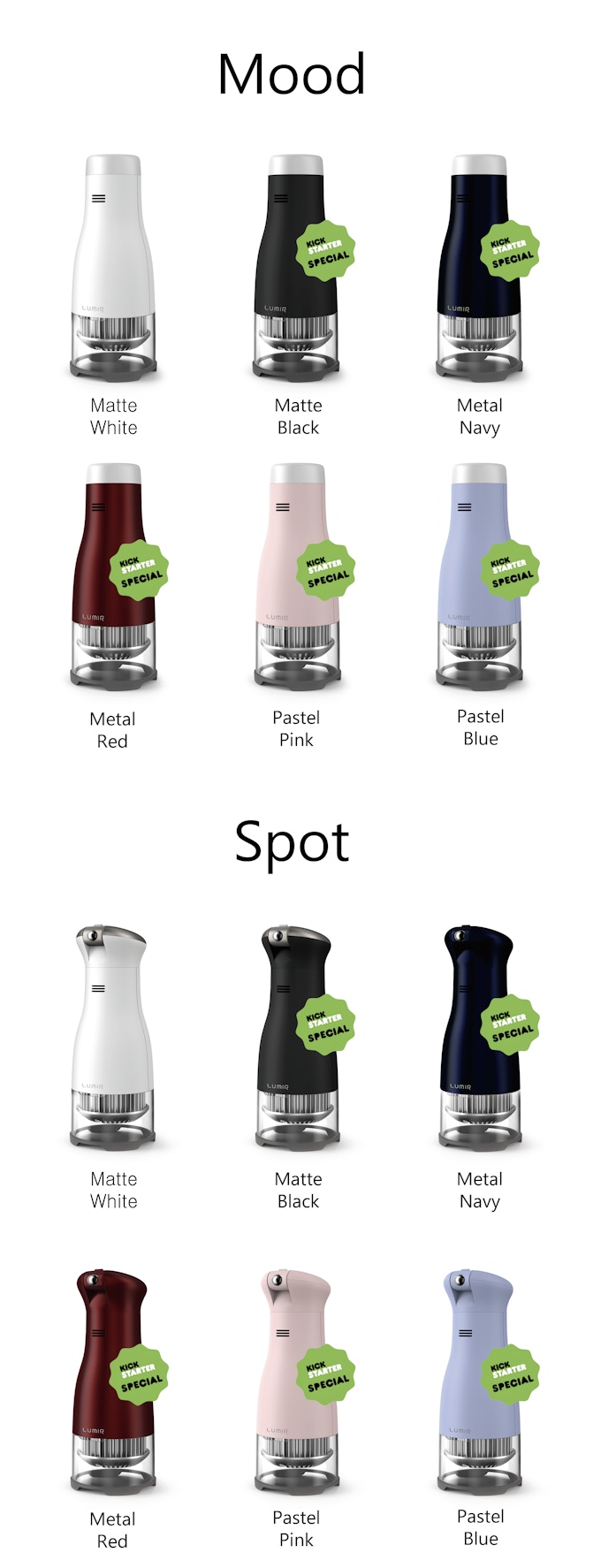
That's a valid thought. But the technology in Lumir is pretty neat if a bit impractical for many western nations with power. However for nations without power, this might help them study at night by generating enough light to read by. However Lumir is much more expensive than some of the other solar charged lights for Africa.
There are several variations of Lumir and Lumir Spot would be the best for reading a book or magazine.
This appears to use a thermoelectric generator (TEG) and a voltage booster. But TEGs don't product much power, and the voltage boosters to boost the volts up high enough for an LED are expensive.
Wow! It seems they are $109usd on Amazon now.
That's a valid thought. But the technology in Lumir is pretty neat if a bit impractical for many western nations with power. However for nations without power, this might help them study at night by generating enough light to read by. However Lumir is much more expensive than some of the other solar charged lights for Africa.
There are several variations of Lumir and Lumir Spot would be the best for reading a book or magazine.
This appears to use a thermoelectric generator (TEG) and a voltage booster. But TEGs don't product much power, and the voltage boosters to boost the volts up high enough for an LED are expensive.
Wow! It seems they are $109usd on Amazon now.
Sunday, July 9, 2017
The REAL story behind Trump and clean water
During Obama's reign, he extended the Clean Water Act to small streams, some of which only contain water for some months of the year. Trump's rollback of this rule would only roll back that addition: small streams that would be covered under the Clean Water Act.
The Obama rule tried to expand the definition of "navigable waters", waters where you can travel on a boat on them, to included 1 inch deep streams, and stream beds that didn't even have have water in them for parts of the year! This includes drainage ditches on the side of the road.
The claim behind the hysteria: 117 million people in the US get their drinking water from small streams. (The footnote says "Streams classified by the U.S. Geological Survey as intermittent, ephemeral or headwater streams.") Intermittent, and ephemeral, mean the stream is not even there the whole year! From the USGS PDF:
Since "headwaters" were grouped with temporary streams in the 2009 EPA study, this makes the 72 million number suspicious.
Sources
The Obama rule tried to expand the definition of "navigable waters", waters where you can travel on a boat on them, to included 1 inch deep streams, and stream beds that didn't even have have water in them for parts of the year! This includes drainage ditches on the side of the road.
The claim behind the hysteria: 117 million people in the US get their drinking water from small streams. (The footnote says "Streams classified by the U.S. Geological Survey as intermittent, ephemeral or headwater streams.") Intermittent, and ephemeral, mean the stream is not even there the whole year! From the USGS PDF:
- Intermittent: "Contains water for only part of the year, but more than just after rainstorms and at snowmelt."
- Ephemeral: "Contains water only during or after a local rainstorm or heavy snowmelt."
- Headwater from here: "(1) the source and upper reaches of a stream; also the upper reaches of a reservoir. (2) the water upstream from a structure or point on a stream. (3) the small streams that come together to form a river. Also may be thought of as any and all parts of a river basin except the mainstream river and main tributaries."
Since "headwaters" were grouped with temporary streams in the 2009 EPA study, this makes the 72 million number suspicious.
Sources
- EPA 2009 study about drinking water from streams. This has a similar map to the EWG map. PDF of data by county.
- EWG article.
- EWG analysis. They provide an interactive map of US states and counties.
Saturday, July 8, 2017
LED light that creates more energy than it uses?
(This is from 2012 but it's still interesting to see if this technology became a product.)
With incandescent bulbs, only 10% of the energy used is converted the light, the rest is converted to heat. Current LED diodes, (as opposed to "LED bulbs" which can contain many diodes) use only about 17% of the energy of an incandescent bulb and do not create much heat, which is good for heat-sensitive applications. For example, when I used standard (incandescent) bulbs in my outside yard light, and winters got to -20F ambient temperatures, the heat from the bulb would eventually crack and destroy the bulb itself from the sheer difference in temperature and the speed at which the bulb heated up. This was long ago and we moved to fluorescent bulbs at the time.
What if there was an LED bulb that produced more energy than it used? MIT researchers claim they have a bulb that creates energy as it uses it. It is 230% efficient, and seems to defy the laws of physics. But how to harvest that energy?
They researchers had a theory of using less voltage.
(I seriously doubt the LED produced light visible to humans but perhaps this concept can be multiplied by using 100s of LED emitters.)
Sources
Inhabitat, 3/24/2012. Retrieved 7/6/2017.
Gizmodo article. Retrieved 7/6/2017.
The journal article. Feb 27, 2012. APS.org. Retrieved: 7/6/2017.
With incandescent bulbs, only 10% of the energy used is converted the light, the rest is converted to heat. Current LED diodes, (as opposed to "LED bulbs" which can contain many diodes) use only about 17% of the energy of an incandescent bulb and do not create much heat, which is good for heat-sensitive applications. For example, when I used standard (incandescent) bulbs in my outside yard light, and winters got to -20F ambient temperatures, the heat from the bulb would eventually crack and destroy the bulb itself from the sheer difference in temperature and the speed at which the bulb heated up. This was long ago and we moved to fluorescent bulbs at the time.
What if there was an LED bulb that produced more energy than it used? MIT researchers claim they have a bulb that creates energy as it uses it. It is 230% efficient, and seems to defy the laws of physics. But how to harvest that energy?
They researchers had a theory of using less voltage.
As you may have guessed, significantly lowering the input power creates a very weak LED bulb. In their tests, the MIT researchers succeeded in generating about 70 picowatts of light from 30 picowatts of energy — an efficiency of 230 percent!Artugo Verdugo comments on the Inhabitat story:
From what I know, this LEDs are more than 100% efficient because they are using electricity+environmental heat to produce light. That means that a large portion of the power being used comes directly from the environment.At this point, neither 30 nor 70 picowatts will light any LED, but it's an interesting observation.
(I seriously doubt the LED produced light visible to humans but perhaps this concept can be multiplied by using 100s of LED emitters.)
Sources
Inhabitat, 3/24/2012. Retrieved 7/6/2017.
Gizmodo article. Retrieved 7/6/2017.
The journal article. Feb 27, 2012. APS.org. Retrieved: 7/6/2017.
Friday, July 7, 2017
Henry Miller: Small amounts of poison are good for you
When people selectively ignore facts, that could be called religion, or a cult. So here's Henry I. Miller. He was the founding director of the FDA’s Office of Biotechnology. He's written numerous articles about GMO foods. He is against labeling GMO foods and against informed decisions. He gets paid for writing articles supporting something so you know his opinion is biased.
Be careful with religious fanatics. The results could be bad.
Source
USRTK.org.
Be careful with religious fanatics. The results could be bad.
Source
USRTK.org.
Subscribe to:
Posts (Atom)