How to print these articles

There are several methods to print these articles.

Using notepad or text editor:

Select text you want to print, copy it to the clipboard using CTL-C. Paste into notepad or your favorite text editor using CTL-V. Use your text editor to print.

Monday, April 4, 2016

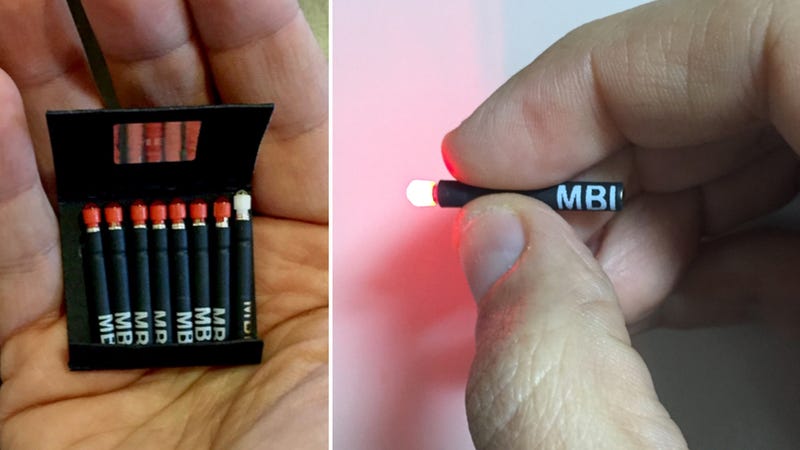
Matchstick-sized LED flashlight!


These appear very similar to fishing bobber lights that have been around since at least 2000, but now they come in a pack. Press the tip to turn it on, and each light goes for 8 hours. They are sold in books of 8. (With the fishing lure light you can just pull the tip out to turn it off.) It's also waterproof! (They probably mean rain proof, not suitable for scuba diving.)

These are neat but easily lost or swallowed.

Preorder a set of 8 lights for $28usd, which is $3.50 each. They sell them though their Indigogo campaign.

Bobber light is still almost $4usd.

Source
Gizmodo, Mar 14, 2016. 

Family threatened with fines for growing their own veg

While this article was posted on April 1 (April Fool's day, a common day of pranks in the US), there are city ordinances which prohibit gardens in the front yard. My town is one of them that completely prohibits anything that is not a well-manicured lawn in the front yard without a variance (a permit to break the local ordinance). In this case, a new law was passed in Missouri on March 28, 2016 which says the garden must be 30 feet from the road, which is not possible in this case in the article. Putting a garden in the backyard doesn't work because the backyard doesn't get enough sun. That is also true for most of my backyard since I can only afford a small house with a very small yard.

This link also has 5 other stories about cities making gardening difficult, expensive, or impossible. 


Source
Rare.us.

BPA studies linked to neurodevelopment, depression, inattention, etc.

More studies linking exposure to BPA as a fetus, and as a child, correlating to anxiety, depression, inattention, and hyperactivity.

Below, the study will be listed first, followed by a summary of the results. Authors are in alphabetical order.


- Braithwaite EC, Kundakovic M, Ramchandani PG, Murphy SE, Champagne FA. Maternal prenatal depressive symptoms predict infant NR3C1 1F and BDNF IV DNA methylation. Epigenetics. 2015;10(5):408-17. doi: 10.1080/15592294.2015.1039221. PMID: 25875334. Link to NIH abstract.

Subjects: Human
Results: 57 pregnant women were recruited and they self-reported depressive symptoms. Saliva cortisol (a stress hormone) was collected. When the infants were 2 months old, cell swabs were collected and the mothers were evaluated for postnatal depressive symptoms. "Prenatal depressive symptoms significantly predicted increased NR3C1 1F DNA methylation in male infants (β = 2.147, P = 0.044). Prenatal depressive symptoms also significantly predicted decreased BDNF IV DNA methylation in both male and female infants."


- Chen F, Zhou L, Bai Y, Zhou R, Chen L. Hypothalamic-pituitary-adrenal axis hyperactivity accounts for anxiety- and depression-like behaviors in rats perinatally exposed to bisphenol A. J Biomed Res. 2015 May;29(3):250-8. doi: 10.7555/JBR.29.20140058. Epub 2014 Nov 12. PMID: 26060449. Link to NIH abstract.

Subjects: Rats
Results: Rats exposed to BPA in utero showed symptoms of depression and anxiety. "Hyperactivity of the hypothalamic-pituitary-adrenal (HPA) axis is one of the most consistent biological findings in anxiety- and depression-related disorders. The HPA axis is reported to be susceptible to developmental reprogramming. The present study focused on HPA reactivity in postnatal day (PND) 80 male rats exposed perinatally to environmental-dose BPA. When female breeders were orally administered 2 μg/(kg.day) BPA from gestation day 10 to lactation day 7, their offspring (PND 80 BPA-exposed rats) showed obvious anxiety/depression-like behaviors. Notably, significant increase in serum corticosterone and adrenocorticotropin, and corticotropin-releasing hormone mRNA were detected in BPA-exposed rats before or after the mild stressor."


- Ejaredar M, Lee Y, Roberts DJ, Sauve R, Dewey D. Bisphenol A exposure and children's behavior: A systematic review. J Expo Sci Environ Epidemiol. 2016 Mar 9. doi: 10.1038/jes.2016.8. [Epub ahead of print] PMID: 26956939. Link to NIH abstract.

Subjects: Articles
Results: After sifting through 2811 citations, 11 articles met their inclusion criteria. "Descriptive analyses indicated that prenatal exposure to maternal BPA concentrations were related to higher levels of anxiety, depression, aggression, and hyperactivity in children. BPA exposure in childhood was associated with higher levels of anxiety, depression, hyperactivity, inattention, and conduct problems."


- Fujimoto T, Kubo K, Nishikawa Y, Aou S. Prenatal low-dose bisphenol A enhances behavioral responses induced by a predator odor. J Toxicol Sci. 2015; 40(5):569-75. doi: 10.2131/jts.40.569.
PMID:  26354373. Link to NIH abstract.

Subjects: Rats
Results: Rat were more sensitive to predator odor was when they were exposed to BPA as a fetus.(Could indicate increased anxiety.)

- Harley KG, Gunier RB, Kogut K, Johnson C, Bradman A, Calafat AM, Eskenazi B. Prenatal and early childhood bisphenol A concentrations and behavior in school-aged children. Environ Res. 2013 Oct; 126:43-50. doi: 10.1016/j.envres.2013.06.004. Epub 2013 Jul 17. PubMed PMID: 23870093; PubMed Central PMCID: PMC3805756. Link to NIH abstract. Link to full study.

Subjects: Human, urine
Results: Prenatal urine concentrations of BPA were correlated with increased anxiety and depression in boys at age 7. No correlation of urine BPA levels were seen with girls at age 7.  Childhood urine BPA levels were correlated with conduct problems with girls at age 7, and with boys at age 7, correlated with inattention and hyperactivity.

 
- Mustieles V, Pérez-Lobato R, Olea N, Fernández MF. Bisphenol A: Human exposure and neurobehavior. Neurotoxicology. 2015 Jul; 49:174-84. doi: 10.1016/j.neuro.2015.06.002. Epub 2015 Jun 27. Review. PMID: 26121921. Link to NIH abstract.

Subjects: Articles
Results: eight out of the twelve available articles that were reviewed, linked BPA to neuro problems, including aggressive behavior, attention deficit, hyperactivity disorder, depression and anxiety impairments, and this occurred mostly in children exposed in utero, indicating disruption of the brain during this critical window of development. Women who plan on getting pregnant should be informed how they can limit their exposure to BPA.


- Ribeiro-Varandas E, Pereira HS, Viegas W, Delgado M. Bisphenol A alters transcript levels of biomarker genes for Major Depressive Disorder in vascular endothelial cells and colon cancer cells. Chemosphere. 2016 Mar 21; 153:75-77. doi: 10.1016/j.chemosphere.2015.12.085. [Epub ahead of print] PubMed PMID: 27010169. Link to NIH abstract.

Results: BPA linked to Major Depressive Disorder. "Here, quantitative Real-Time Polymerase Chain Reaction (qRT-PCR) results show that BPA at low concentrations (10 ng/mL and 1 μg/mL) induces differential transcript levels of four biomarker genes for Major Depressive Disorder (MDD) in HT29 human colon adenocarcinona cell line and Human Umbilical Vein Endothelial Cells (HUVEC)."


- Wolstenholme JT, Goldsby JA, Rissman EF. Transgenerational effects of prenatal bisphenol A on social recognition. Horm Behav. 2013 Nov; 64(5):833-9. doi: 10.1016/j.yhbeh.2013.09.007. Epub 2013 Oct 5. PMID: 24100195. Link to NIH abstract. Link to full study.

Subjects: Mice
Results: BPA exposure has long-lasting effects that go on for several generations.


- Xu X, Hong X, Xie L, Li T, Yang Y, Zhang Q, Zhang G, Liu X. Gestational and lactational exposure to bisphenol-A affects anxiety- and depression-like behaviors in mice. Horm Behav. 2012 Sep; 62(4):480-90. PubMed PMID: 23240141. Link to NIH abstract.

Subjects: Mice
Results: Mice exposed to BPA while they were fetuses, or while they fed on their mother's milk, showed increased anxiety and depression-like behavior.

Other links
NIH search.
GM No!: The Complete History Of Monsanto, “The World’s Mos...

GM No!: The Complete History Of Monsanto, “The World’s Mos...: Before I post the topic at hand, General Mills will soon be labeling their packaging to indicate the presence of GMOs in their products - sp...

Spring brings Easter candy, bunnies, eggs, and heavy metals

Researchers at the Washington State Dept of Ecology looked for heavy metals in children's jewelry. They looked for cadmium, lead, antimony, arsenic, cobalt, mercury, and molybdenum. Lead can be absorbed through the skin although the more common route of exposure is ingestion. But lead causes irreversible brain damage.

Washington law restricts cadmium levels to 40ppm and lead levels to 90ppm. Manufacturers also must inform Washington state if any product contains these metals. Children's products that contain cadmium and lead are also regulated by the Consumer Products Safety Commission.  159 products were broken down into 893 components. A broad range of jewelry products were purchased.

All samples contained at least one of the heavy metals.

Percent of items that contained a heavy metal:
  • Antimony: 47%. 
  • Arsenic: 39%. 
  • Cadmium: 68%. Results ranged from < 1ppm to 984,000ppm. One dress necklace was 98.4% cadmium.
  • Cobalt: 76%.
  • Lead: 97%. Some items contained 10.7% lead.
  • Mercury: 29%. 
  • Molybdenum: 61%.

There are 2 major problems here:
  • Manufacturers are breaking the law. 
  • Law enforcement is not enforcing the law. 


Source
Sekerak, Sam. Cadmium and other metals in children's jewelry. Washington State Dept of Ecology. 2015. Link to PDF.

Which GMO crops are grown in the US?

As of 2015, over 90% of corn, soybean and cotton crops grown in the US are GMO crops. Corn and soybean make it into the food supply, and there is no consensus among scientists regarding the safety of foods that are Roundup Ready or that contain the Bt Crytoxin.

GMO crops in the US below through 2012.
GMO crops 2000-2012. From MotherJones.com

Sunday, April 3, 2016

Fracking wastewater used to irrigate California organic crops

WTF people?? How is this is legal?

Apparently it's legal to use fracking wastewater to water organic crops in rather dry California. This water is so toxic, companies won't release what's in it because of liability issues.

This practice certainly must violate the USDA National Organic Program rules here.
The USDA organic regulations describe organic agriculture as the application of a set of cultural, biological, and mechanical practices that support the cycling of on-farm resources, promote ecological balance, and conserve biodiversity. These include maintaining or enhancing soil and water quality; conserving wetlands, woodlands, and wildlife; and avoiding use of synthetic fertilizers, sewage sludge, irradiation, and genetic engineering.
And more from the NOP PDF...
Organic crop producers are responsible for preventing contact between organic and conventionally-grown crops, as well as contact with prohibited pesticides or fertilizers. Split operations (farms that raise both organic and conventional crops) must make sure that organic crops don’t contact prohibited substances through accidental sprays of conventional agrochemicals, spray drift, or residues on equipment from non-organic fields.

Source
Source: Mar 23, 2016.
Summary of US organic practices. Link to PDF.
This group says US regulations allow fracking wastewater to be used on organic crops.


Are crops that produce the Bt protein dangerous for people?

Bt crops are genetically modified to create a crystal protein from the Baccillus thurigensis bacterium, which, when ingested by insects feeding on the crops, kills the insect pests. The Bt toxin, one common one is called CRY1A, pokes microholes in the gut of the insect, and the insect dies. Bt spores do not spread to other plants or insects on their own and Bt powder spread on plants is easily washed off and becomes ineffective.

Created in 1995, potatoes which create Bt crystal proteins were approved for crops in the US. In 1996 corn was approved for growth in the US. By 2014, 7 million farmers were using Bt cotton in India.

Bt powder is a preferred method of insect control for backyard farmers as it can be washed off easily before the food is eaten, but when the cry protein is in the plant itself, it cannot be washed off, and is consumed by people.
Bt action is very specific. Different strains of Bt are specific to different receptors in insect gut wall. Bt toxicity depends on recognizing receptors, damage to the gut by the toxin occurs upon binding to a receptor. Each insect species possesses different types of receptors that will match only certain toxin proteins, like a lock to a key. It is because of this that farmers have to be careful to match the target pest species with a particular Bt toxin protein which is specific for that insect. This also helps the beneficial insects because they will usually not be harmed by that particular strain of Bt.
The EPA has found Bt to be safe yet we already know the track record of the EPA: it's in the pocket of big biotech and conveniently ignores facts that will affect biotech profits. In the 1990s the EPA was also the agency which declared meltwater ditches next to roads on private property a "protected watershed" (even though the water was temporary) and even quarantined property from homeowners and prevented from doing something as simple as planting flowers too close to the "watershed". (When a property was declared a "watershed" it became protected. So even though the owner paid money for the property, they were unable to develop it for commercial or residential purposes.) Past performance is the best indicator of future performance. 

Bt pellets work well in controlling mosquito larva in ponds, but it appears to kill all other invertebrates, in my experience. The good part is the Bt does not survive the winter in my pond. (The next spring I added back ostracods and daphnia and they survived.)

In 2011 a study found that Bt toxins (cry proteins) killed fetal cells inside human mothers.

In 2013, scientists found the Bt cry toxin (aka cry protein) CRY1AB was affecting blood cells in mice. Their conclusion was that cry proteins cause some problems in vertebrates and the toxic effects increase with long-term exposure.

In the cast of GMO crops that produce the Bt toxin, it may be better to avoid them altogether. Better safe than sorry. See also "The Failure of the Scientific Establishment" which lists more items mainstream science claimed was safe.

Links

  1. Arisa, Aziz and Samuel Leblancc (University of Sherbrooke). Maternal and fetal exposure to pesticides associated to genetically modified foods in Eastern Townships of Quebec, Canada. Reproductive Toxicology. May 2011. Link to Elsevier abstract.
  2. Bt info from UCSD.
  3. EPA Biopesticide fact sheet. 
  4. Mezzomo BP, Miranda-Vilela AL, Freire IdS, Barbosa LCP, Portilho FA, et al. (2013). Hematotoxicity of Bacillus thuringiensis as Spore-crystal Strains Cry1Aa, Cry1Ab, Cry1Ac or Cry2Aa in Swiss Albino Mice. J Hematol Thromb Dis. 1: 104. doi:10.4172/jhtd.1000104. Link to PDF. 
  5. Wikipedia. 

Mega List: Is Cordyceps a safe and effective supplement?


DISCLAIMER: Cordyceps is classed as a nutrional supplement in the US and as such no research is required as to the safety or effectiveness of Cordyceps. USE AT YOUR OWN RISK. 

NOTE: Not all NIH links contain a link to the full study. But look in the upper right corner of the NIH page and you might see a link to an EPUB or PDF which should contain the full study.

Name: Cordyceps sinensis

Common names: Cordyceps , aweto , caterpillar fungus , Cs-4 , Dong Chong Xia Cao , keera jhar , keeda ghas , semitake , tochukaso , XinGanBao , yarshagumba , yartsa gunbu , yatsa gunbu , Zhiling.

Cordyceps sinensis is the fungus found in Tibet above the altitude of 3800m. It's also called "Yarsa gumba" and "Yarcha gumba". It's the one that takes over caterpillars, and fetches a VERY high price in Asian markets. Traditional folk medicine uses Cordyceps to treat 21 illnesses such as asthma, erectile dysfunction, cancer, TB, cough and cold, diabetes. It is said to give people increased health and vitality and energy by acting as an anti-inflammatory.

Cordyceps shows promise, but more studies need to be done. Cordyceps is currently harvested non-sustainably from the wild. I know of no commercial production of Cordyceps.

Medical Health Guide gives more details such as dosage (5-10g daily) and side effects (no major problems have been reported yet.)

Newborn babies already contain toxins

Blood from 10 umbilical cords was analyzed. In this report the EWG found an average of 200 industrial chemicals and toxins in cord blood. They tested for 287 chemicals, and we already know what 180 of them cause cancer, and more cause development problems.

See the full report for a breakdown on types of chemicals and how many were found. Even this small sample size means more study is important.


Source
Environmental Working Group Report, 2005.